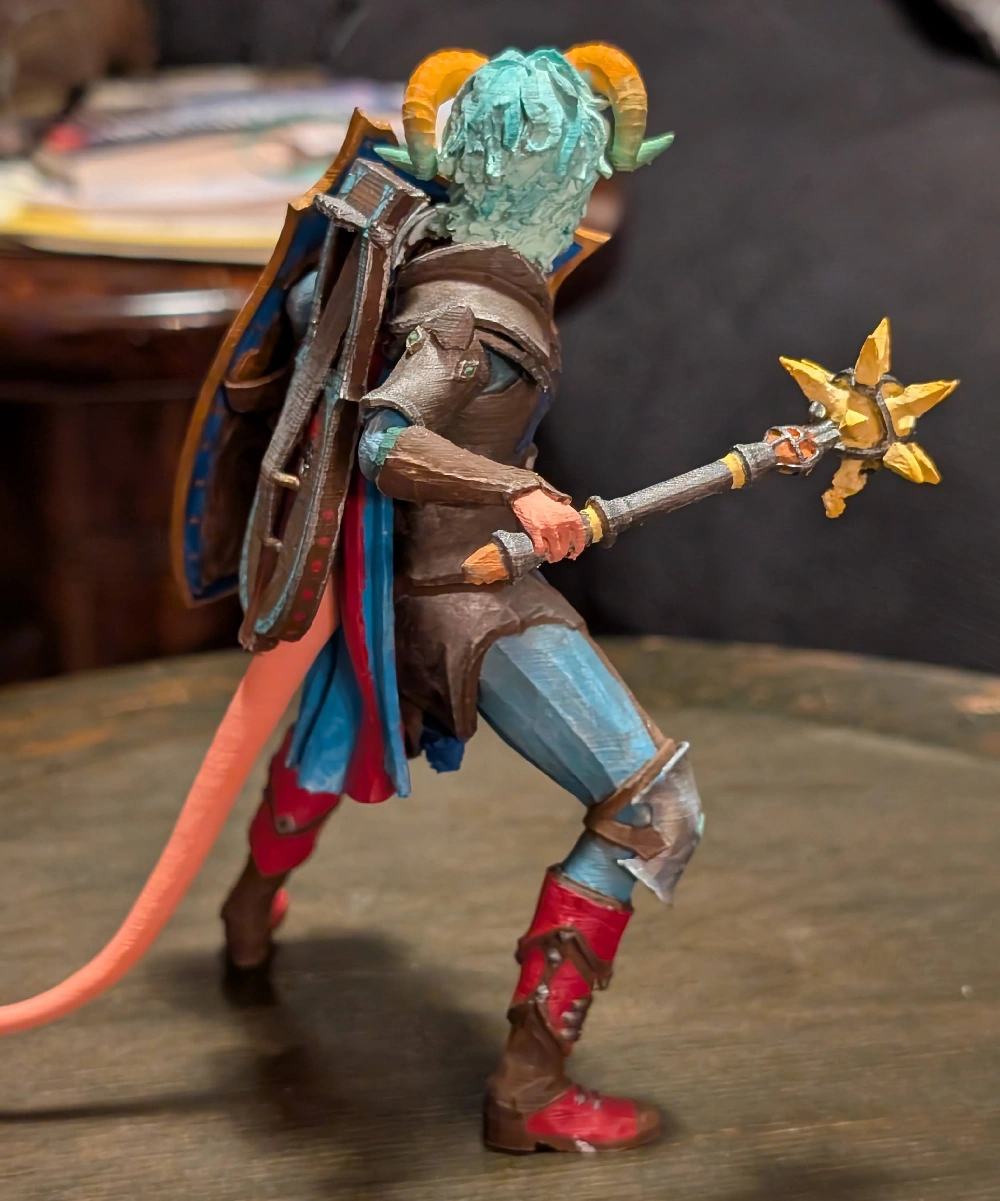
After finishing Baldur's Gate 3 for the first time and experiencing that incredible 200-hour journey, I knew I wanted a physical figurine of my Tav Ramie. I have access to a Prusa MK4, so I figured I could somehow extract her 3D model from the game, slice it, and print it. I went into this knowing it would be a daunting task, but I completely underestimated just how many hours of manual labor it would actually take. Because I spent so much time figuring this out through trial and error, I documented my entire workflow into a comprehensive step-by-step guide on GitHub to save others the headache.
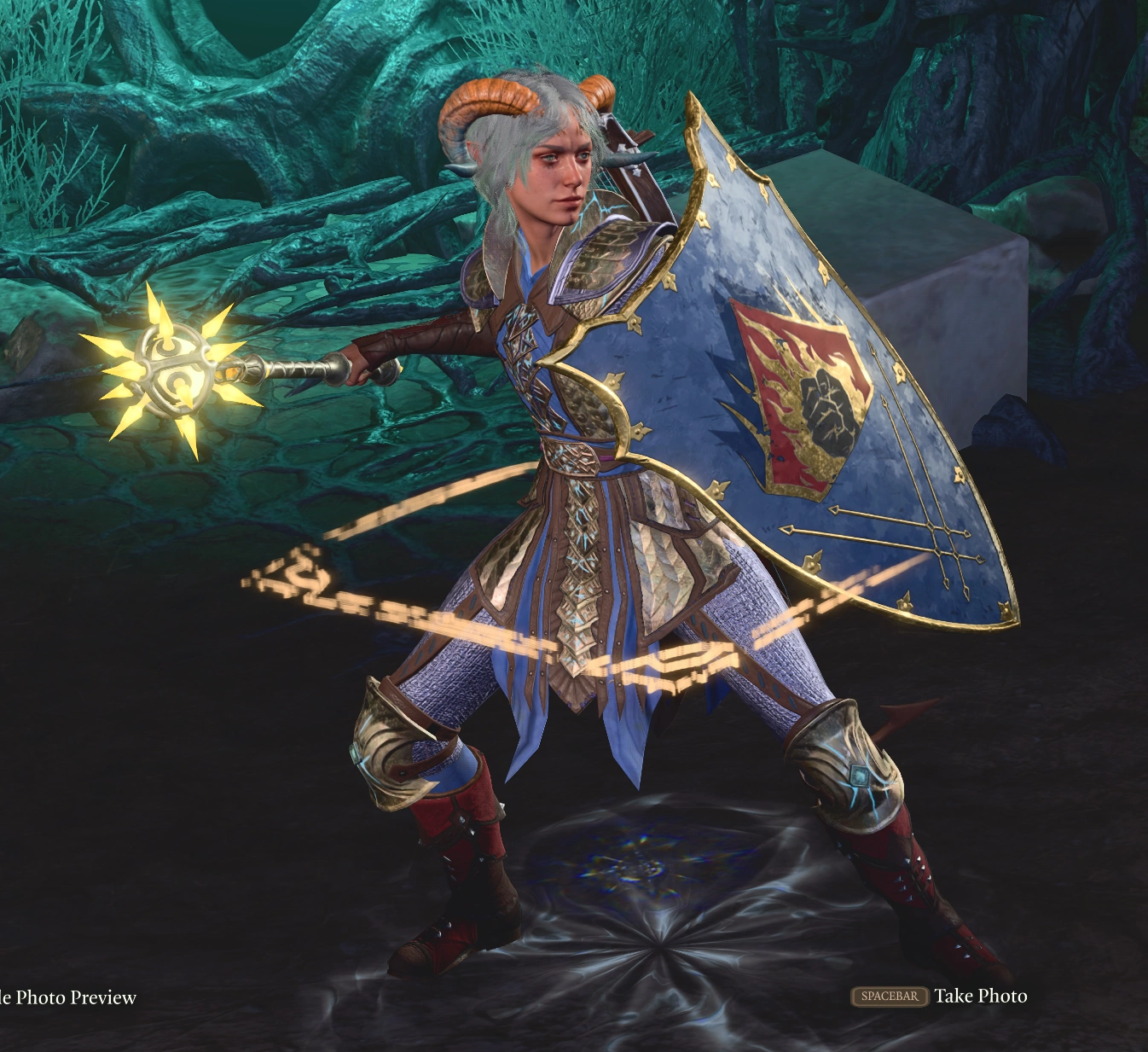
Of course, there is no simple "export to STL" button for your custom character with all their specific armor and weapons equipped in the game. So I had to use a program called NinjaRipper that I knew from another project, which intercepts the render calls sent from the game engine to your graphics card. To get the best results for a Blender import later, I ended up hiding Ramie in a tiny cellar switching to Photo Mode with a top-down view and a 30-degree FOV, and triggering the capture. Doing this in a small room prevented the game from trying to export all the background geometry.


Importing the resulting hundreds of raw mesh files into Blender and trying to export it as a .stl file taught me a lesson I would get to learn over many hours:
video game assets are built entirely for the camera, not for the physical world.
To a 3D printer slicing software, Ramie's model was mathematically unintelligible, the mesh was full of non-manifold geometry, meaning it didn't form a closed, solid volume.
It was made of zero-thickness surfaces, unsealed edge loops, and intersecting shapes that just floated inside each other without physically connecting.
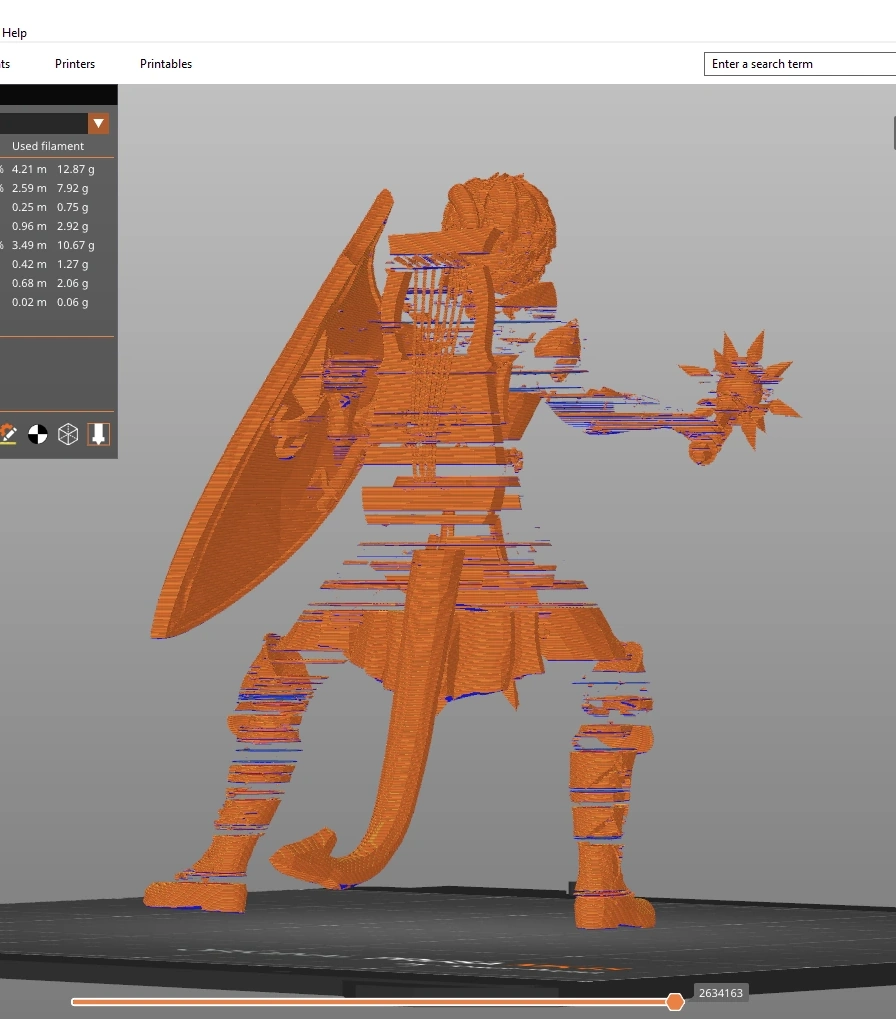
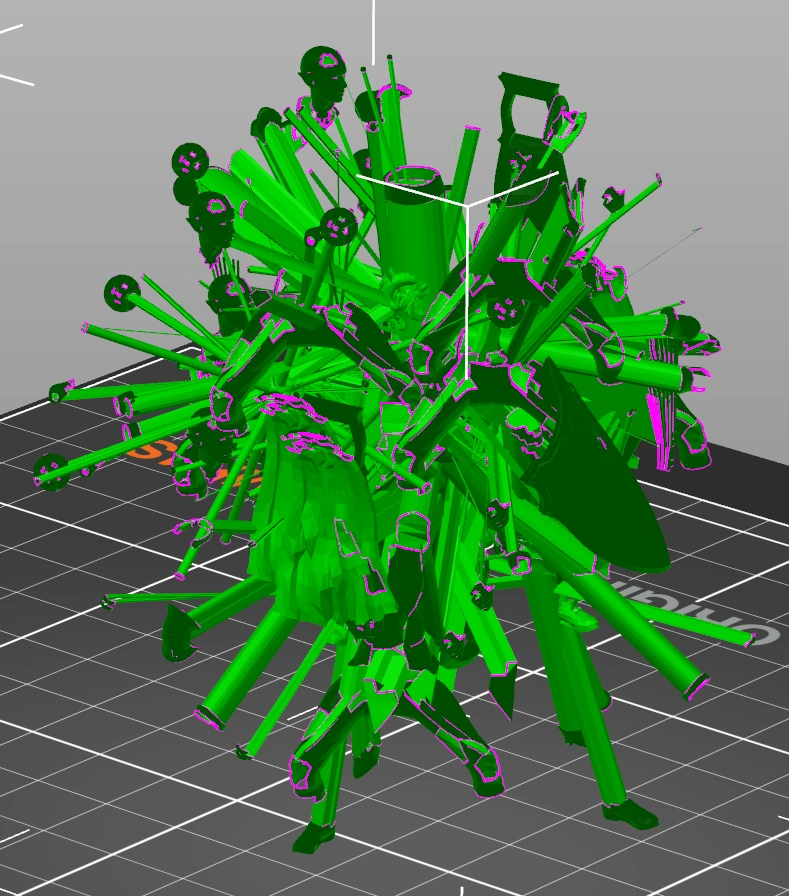
Fixing the model became a long manual cleanup effort. I had to isolate every individual mesh island, from her body and armor to her weapons, and manually bridge open edge loops and triangulate missing faces to force them into a single printable solid. Game hair, for example, is usually made of flat, transparent geometry strips, which I had to solidify and decimate into a printable mass. I had to use extrude modifiers to give her cape actual thickness, and selectively exaggerate microscopic details like leather straps and buckles so the printer nozzle could physically resolve them. Because the game uses inverse kinematics to place feet dynamically on uneven ground, I even had to manually flatten the soles of her boots so the printed figurine would stand upright. Finally, I used Edge Creasing and Subdivision Surface modifiers to remove the low-poly look from her organic skin and cloth, while keeping her metallic armor plating looking sharp.
It's stuff like this that you would never think of when starting a project without any knowledge around this.
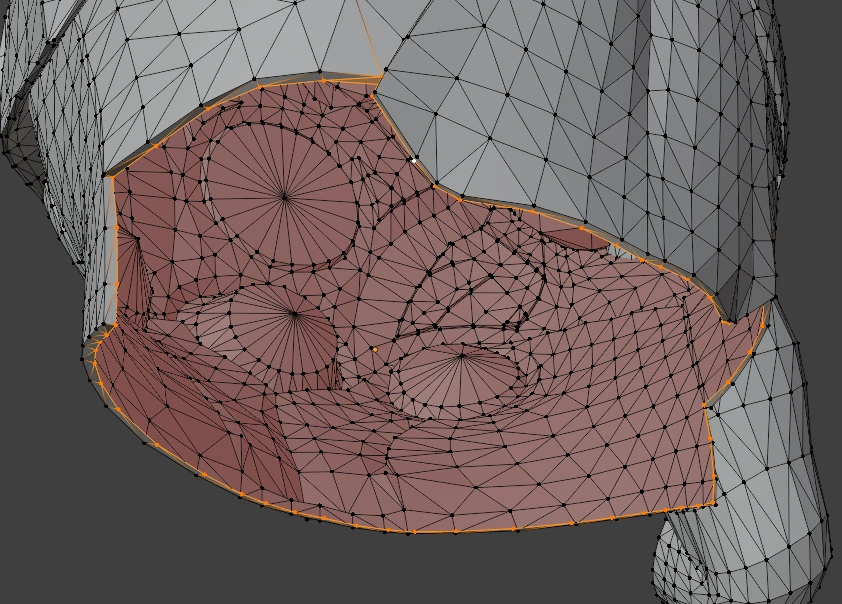
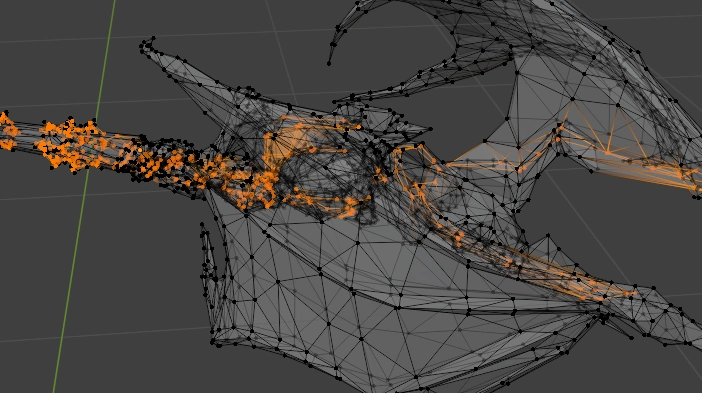
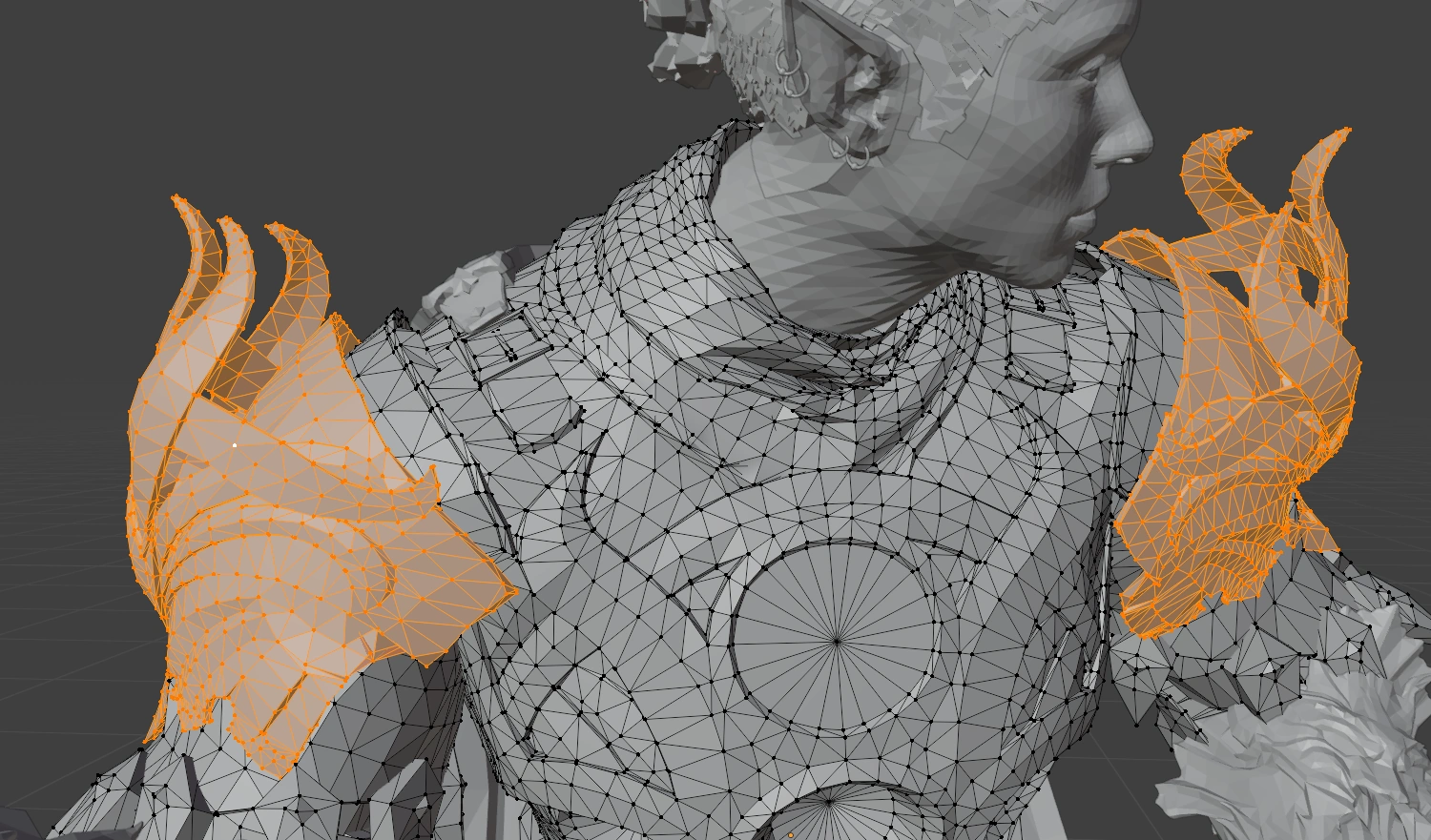

When I finally had a manifold file, I sent it to my PrusaSlicer, but even then, 3D printing was challenging. The first three prints were failures, the first two because the model was not yet ready, because I missed a few islands.
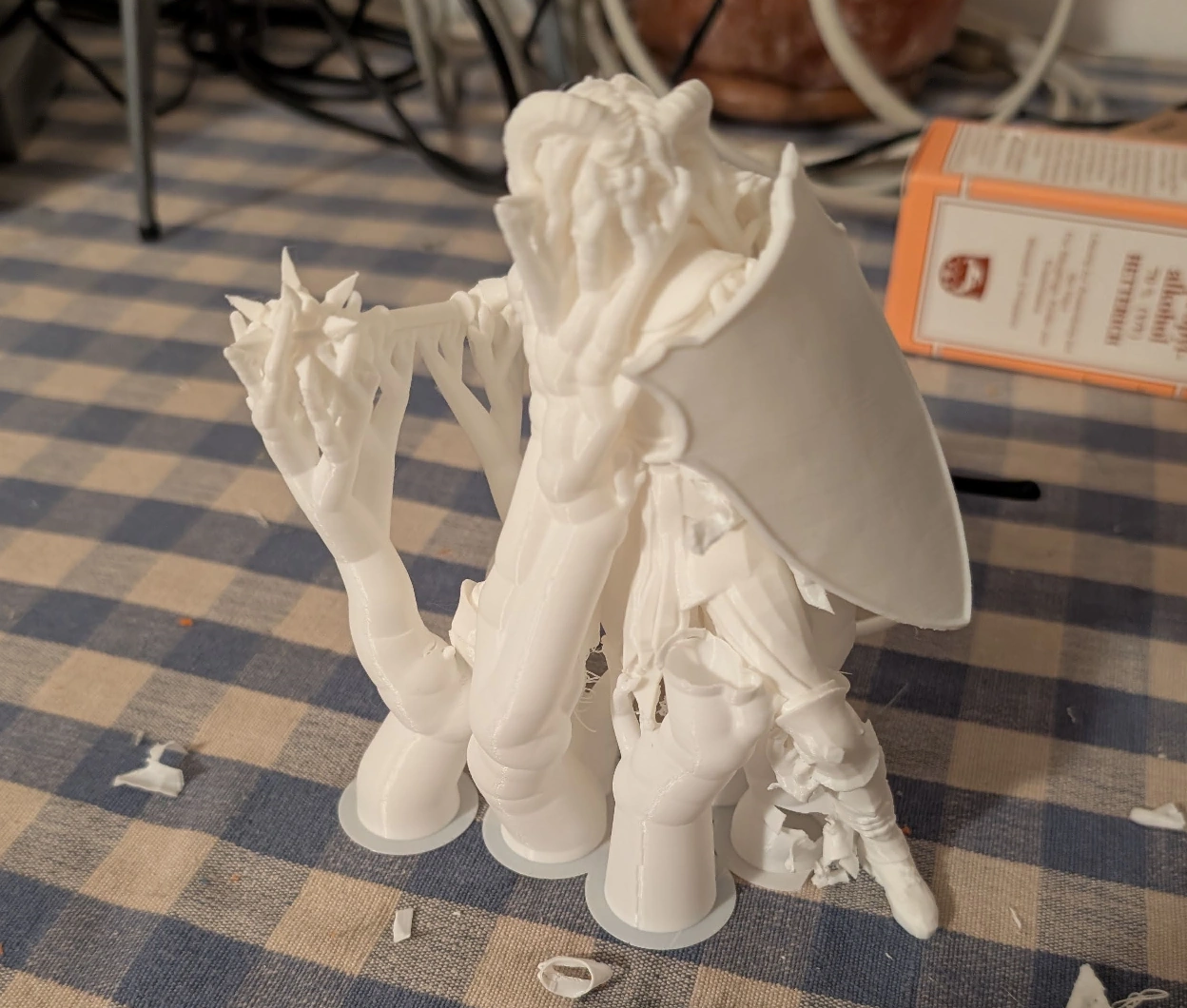
The third one was theoretically fine, but I used "Organic" supports where the thin, hanging tips of Ramie's battle skirt failed to anchor properly and ended up printing as loose noodles in mid-air. Switching the support generation to "Snug" on the final made the result much more clean. The print took around 20 hours to complete for a 13.5cm tall figurine.
But I wasn't done yet, because a gray plastic figure doesn't really capture Ramie. I had never painted a miniature of this scale before, so I actually bought a small Warhammer character to practice on first, to see how the paints behaved. I picked up some proper Citadel miniature paints, metallic colors for her armor, and shade colors for her skin.
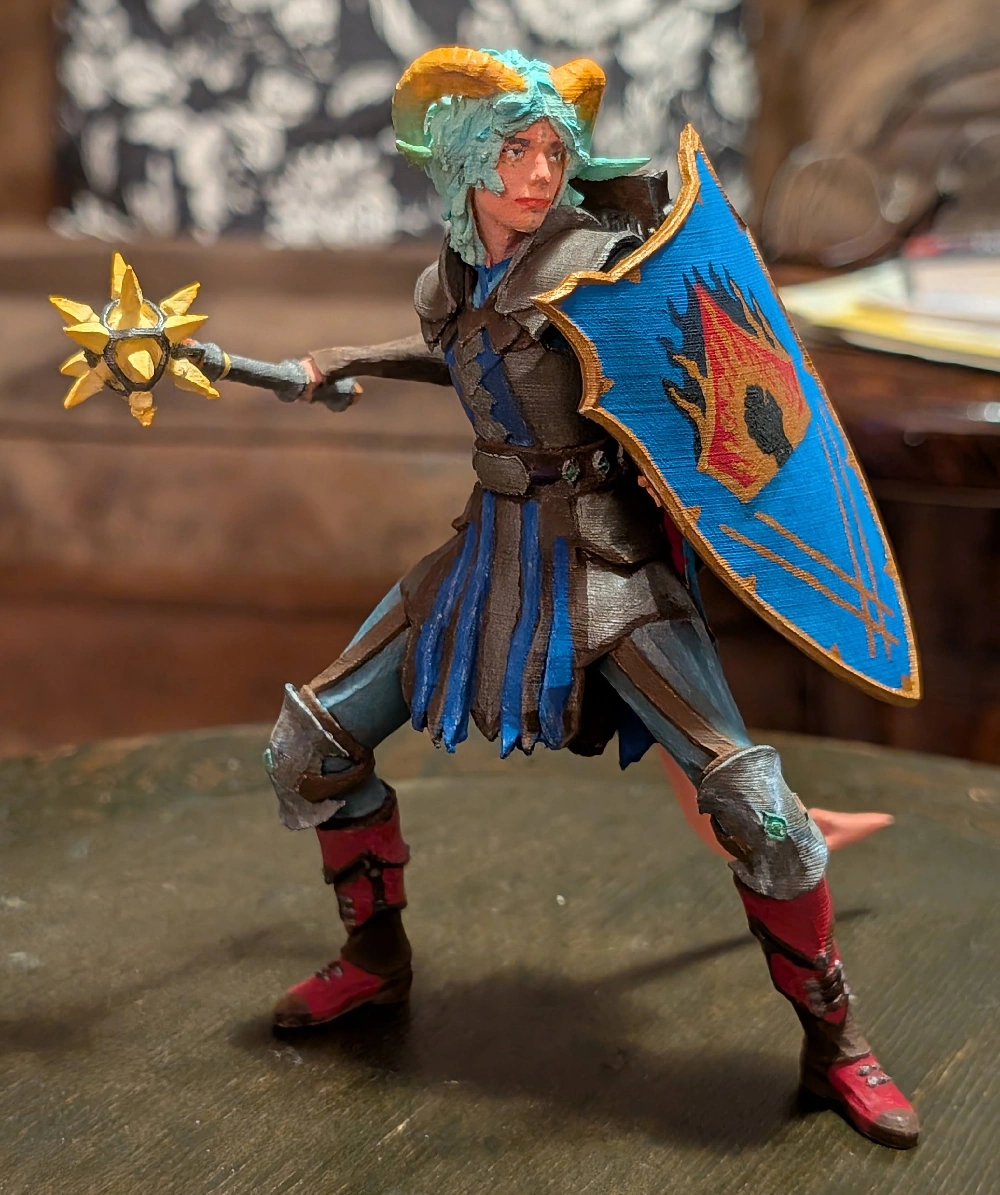
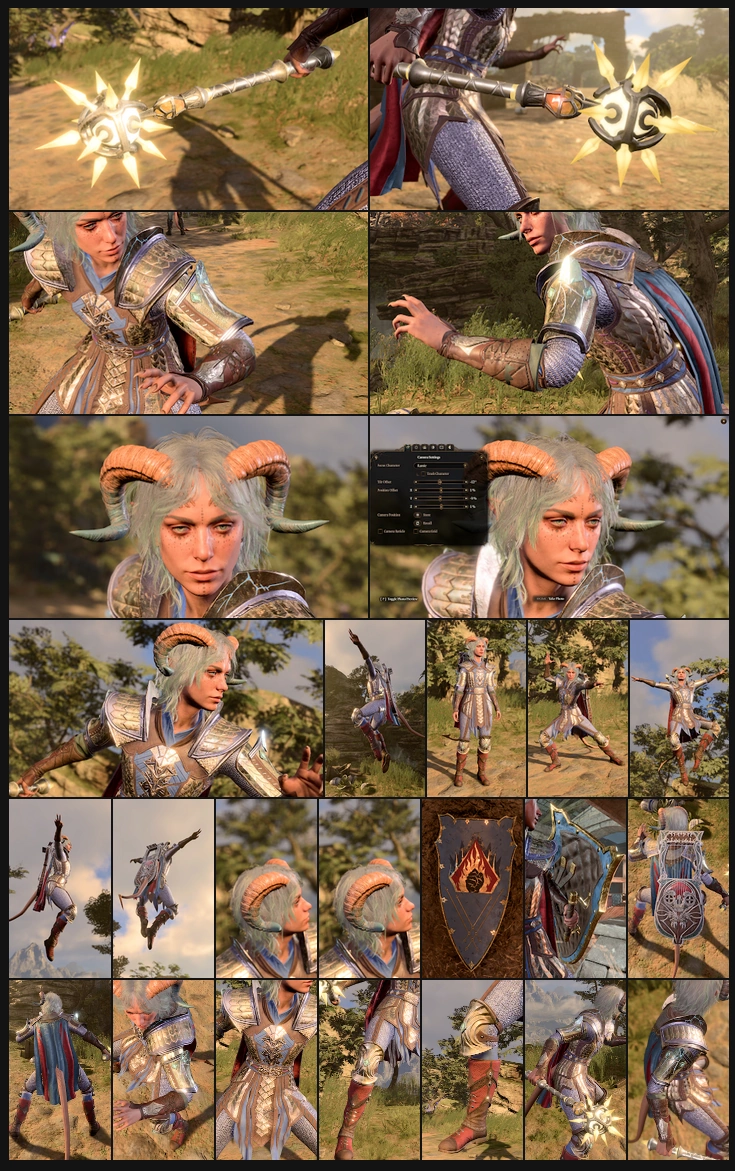
For the painting process itself, I used the screenshot mode in the game to create an album filled with close-up shots of every element. I started with the largest base colors, not worrying too much about spilling over the edges, and slowly worked my way up to the outlines and the tiny textures. The accessories were particularly time-consuming, especially the intricate wood and gold details on her lute and the patterns on her shield. A surprisingly hard part for me was the face, where I had to use a brush with barely any bristles to carefully dot in her eyes.
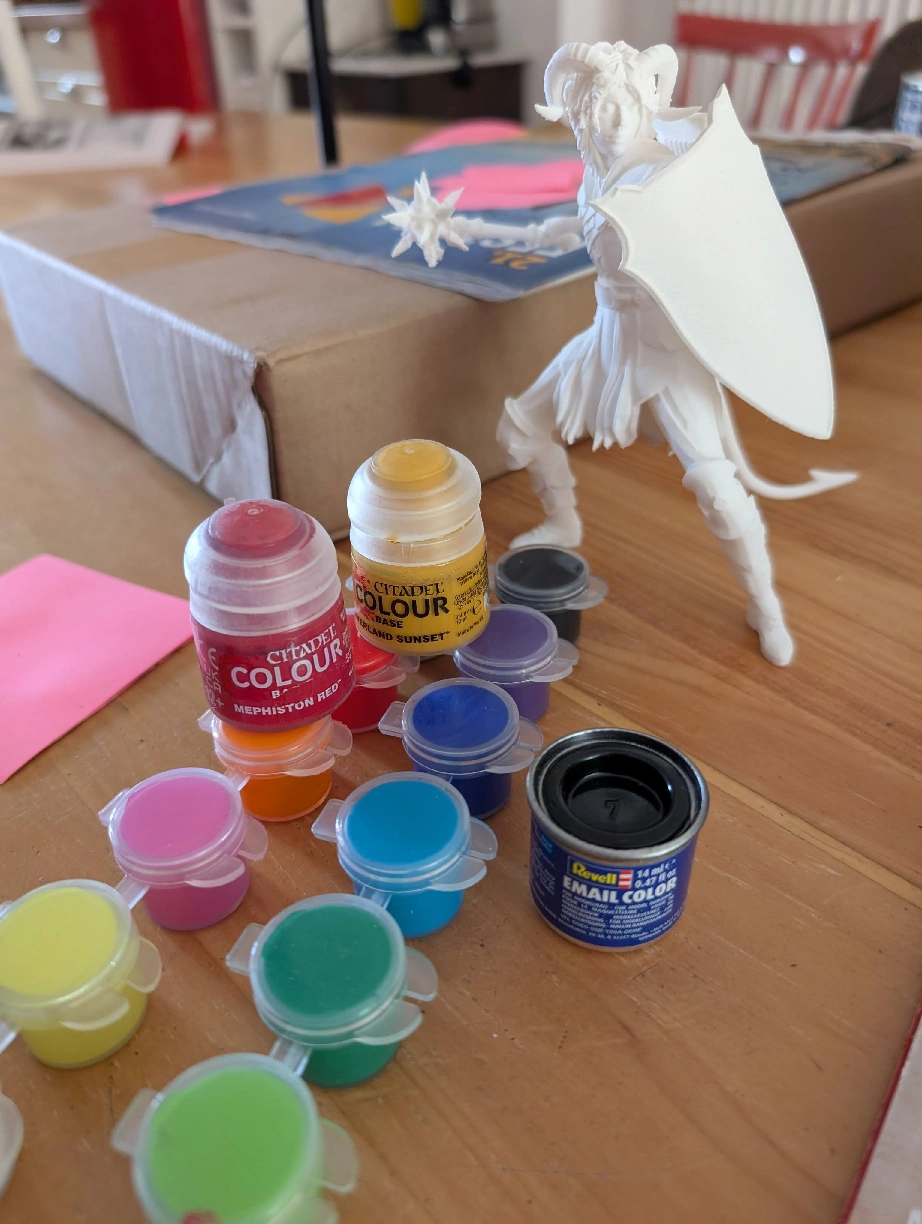
It was an exhausting, highly tedious process from start to finish. But now, I have a physical replica of the character I spent an entire summer adventuring with sitting right here on my desk. Looking at the final painted figure, the 40+ hours were completely worth it.