This project is a non-commercial, fan-made adaptation. I have a lot of respect for the original design by Matthew Dunstan and the art by Maxime Morin, so I've included a full legal disclaimer and attribution in the repository. If you are interested in how the board generation logic works or want to host a session yourself, you can find the source code and instructions on GitHub.
I got to play some of the entries in the board game series Next Station at a local board game event. After that event, I wanted to play it with my brother, however him living elsewhere would have made playing the physical version together difficult. So, I decided to build "Next Station Together" as a digital version of the game to bridge this gap.
The project is split into two main components: a Java-based board generator and a React-based web interface. The generator treats the city as a mathematical graph where stations are nodes and potential tracks are edges. I spent a lot of time working on the generator to ensure that the procedural generation didn't just place symbols randomly, but produces playable and interesting layouts. It tries things such as maintaining a certain density of interchange stations, ensuring that no area of the map becomes a dead end too early in the game and that the river has an interesting shape.
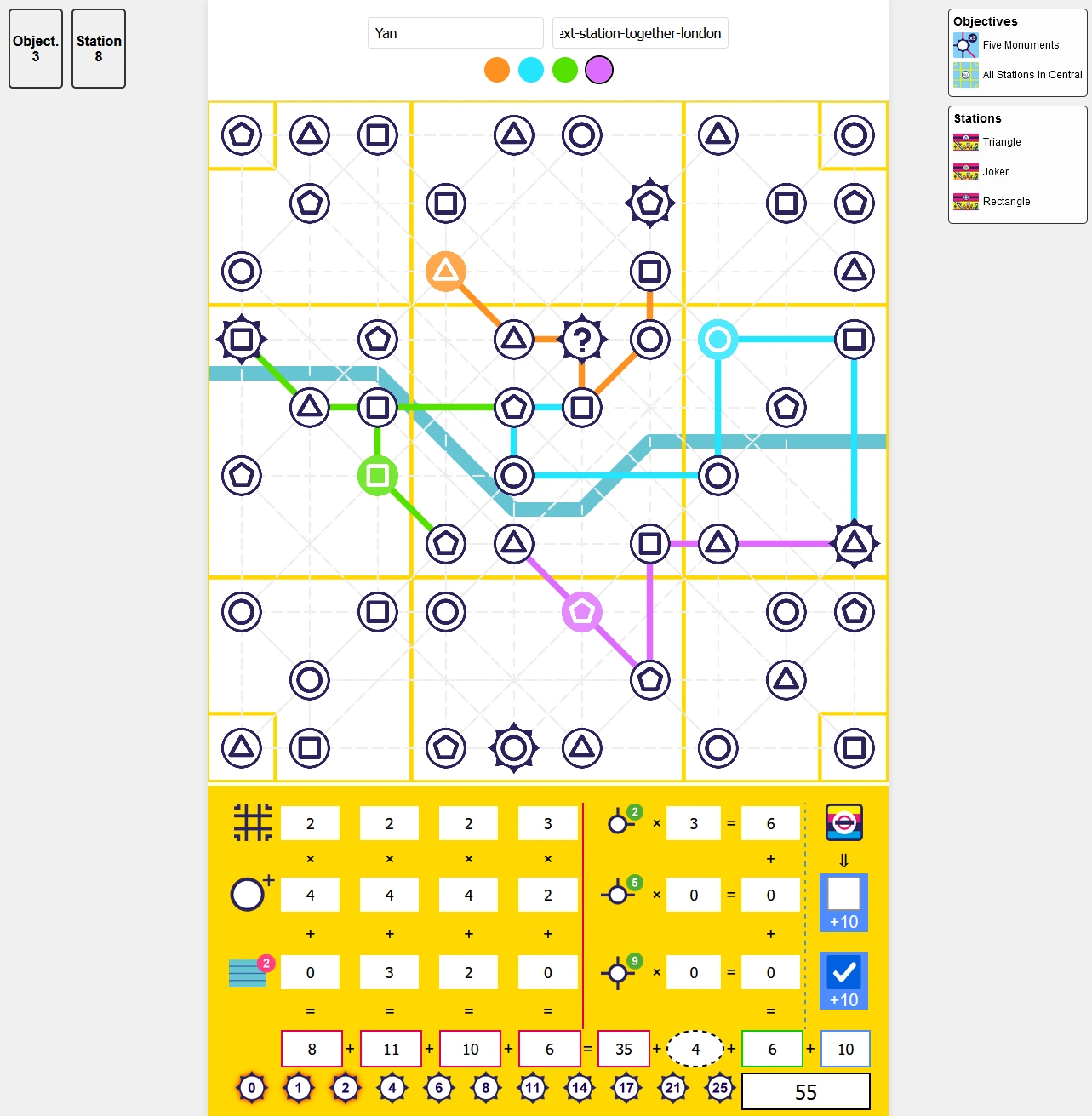
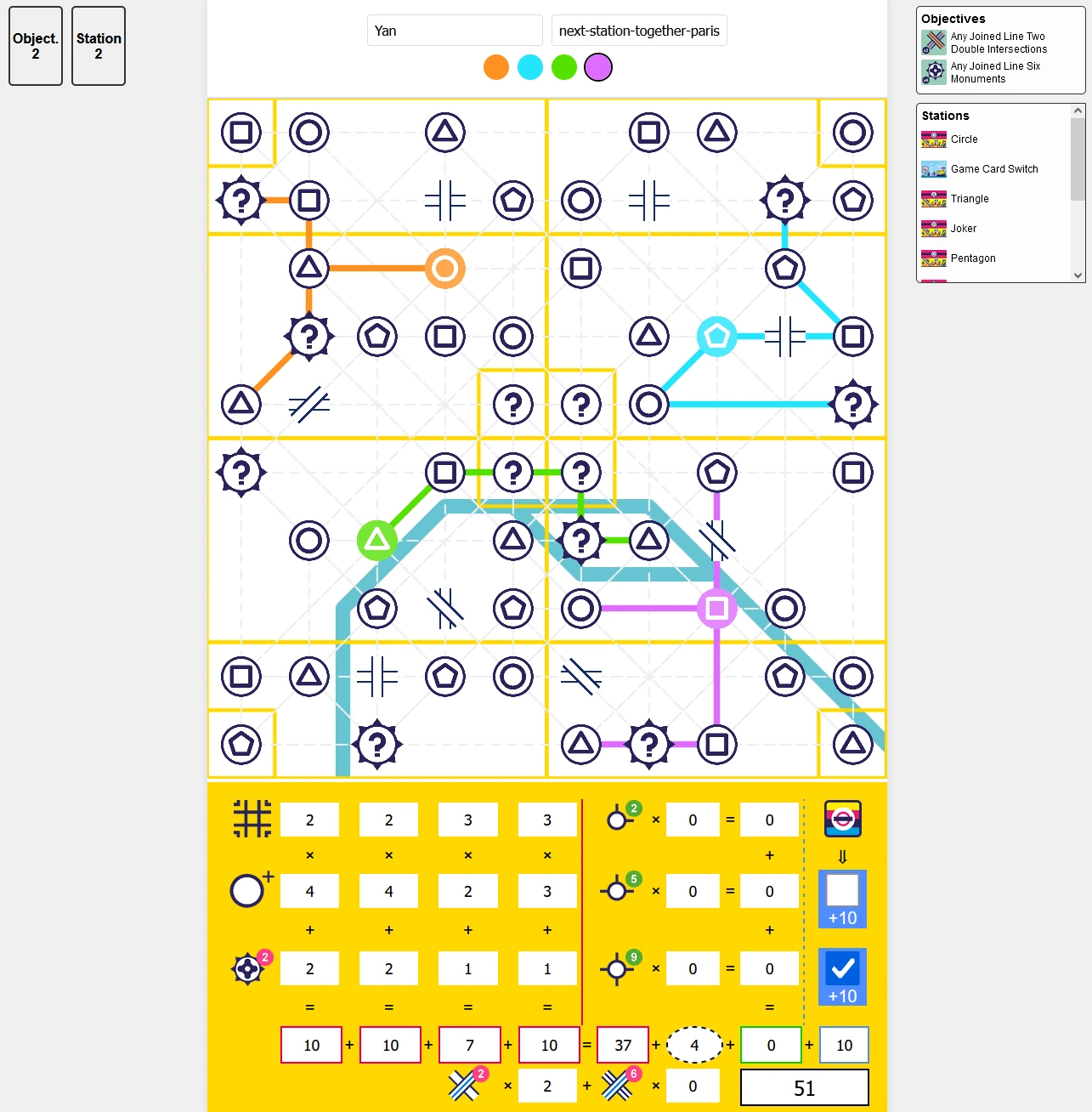
When a board is generated, it is exported as a directory containing the configuration files with a preview image to quickly skim through to pick an interesting one to play. The frontend shows a board interface where players can draw their tube lines. One player takes on the role of the conductor and handles the card flipping, while everyone else follows along in their own browser. The interface also includes an automated score calculator that adjusts itself to the rules selected in the generator. The system automatically tallies up the points for districts visited, longest stretches, and river crossings based on the rules for London or Paris, or custom rules.