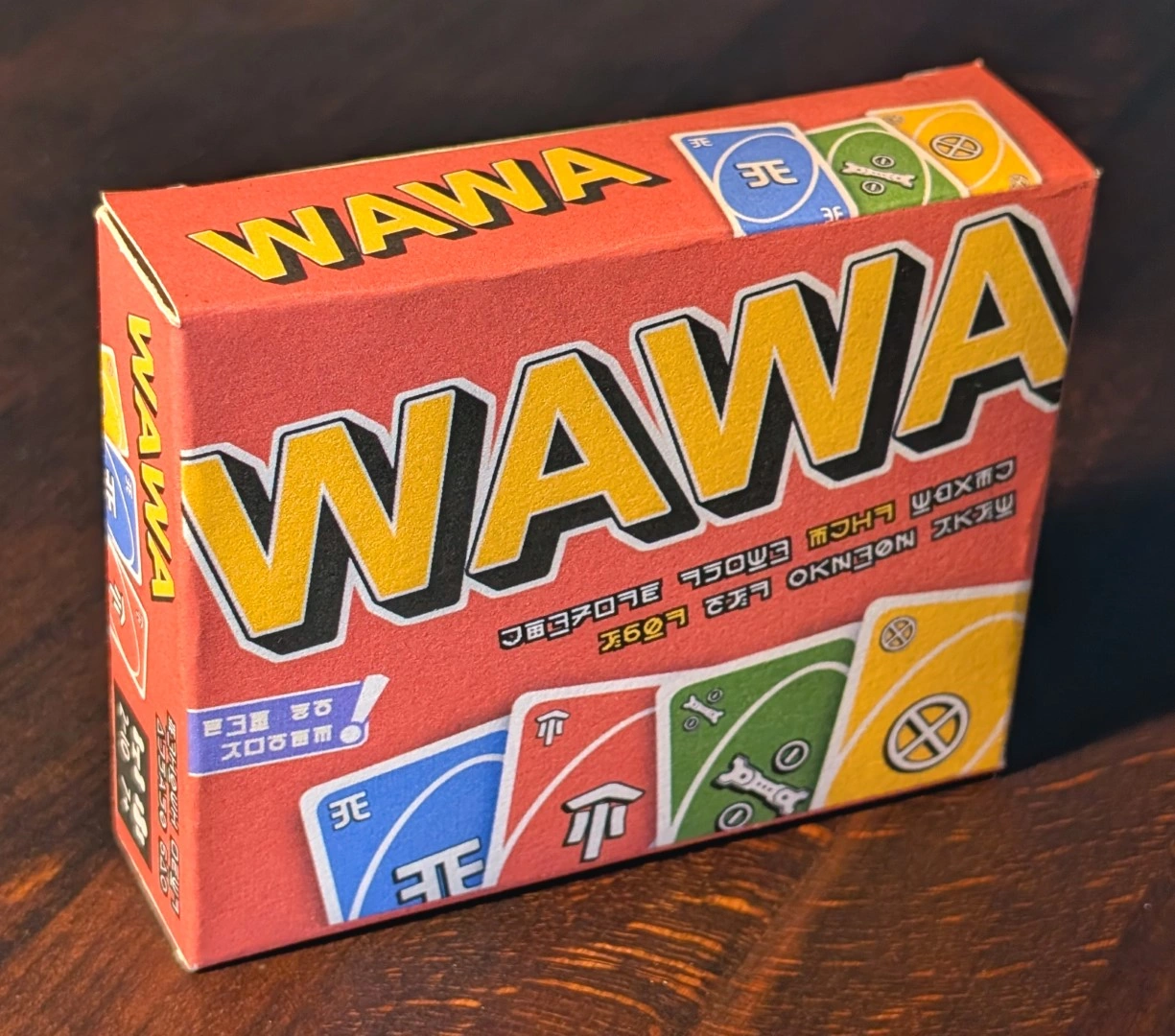
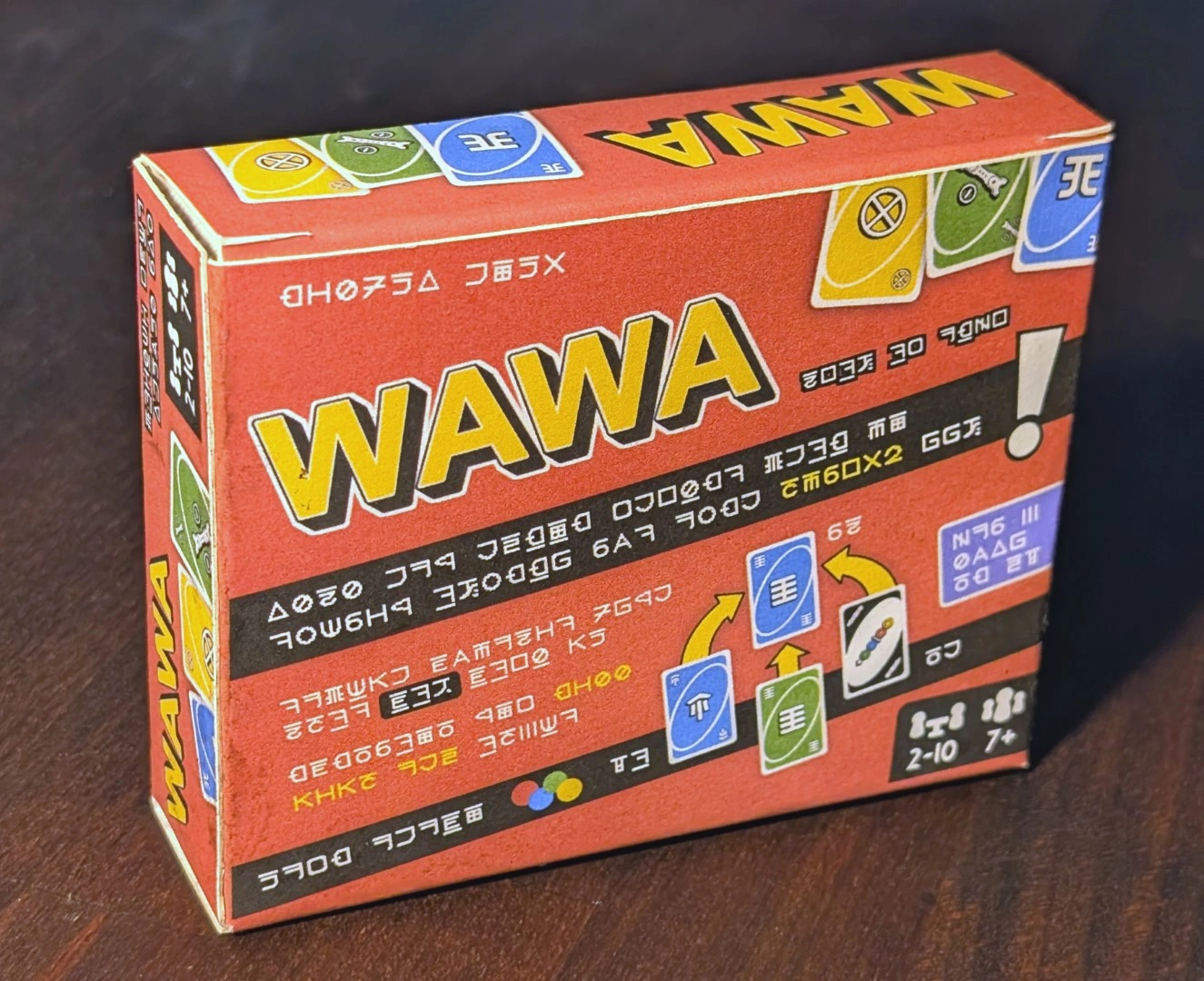
Since this project is gaining traction I'll say that I'm happy where I am with this project, and do not plan on expanding upon it any further, nor am I selling copies of it. If you want to replicate this project for yourself, you can contact me, and I'll send you the files!
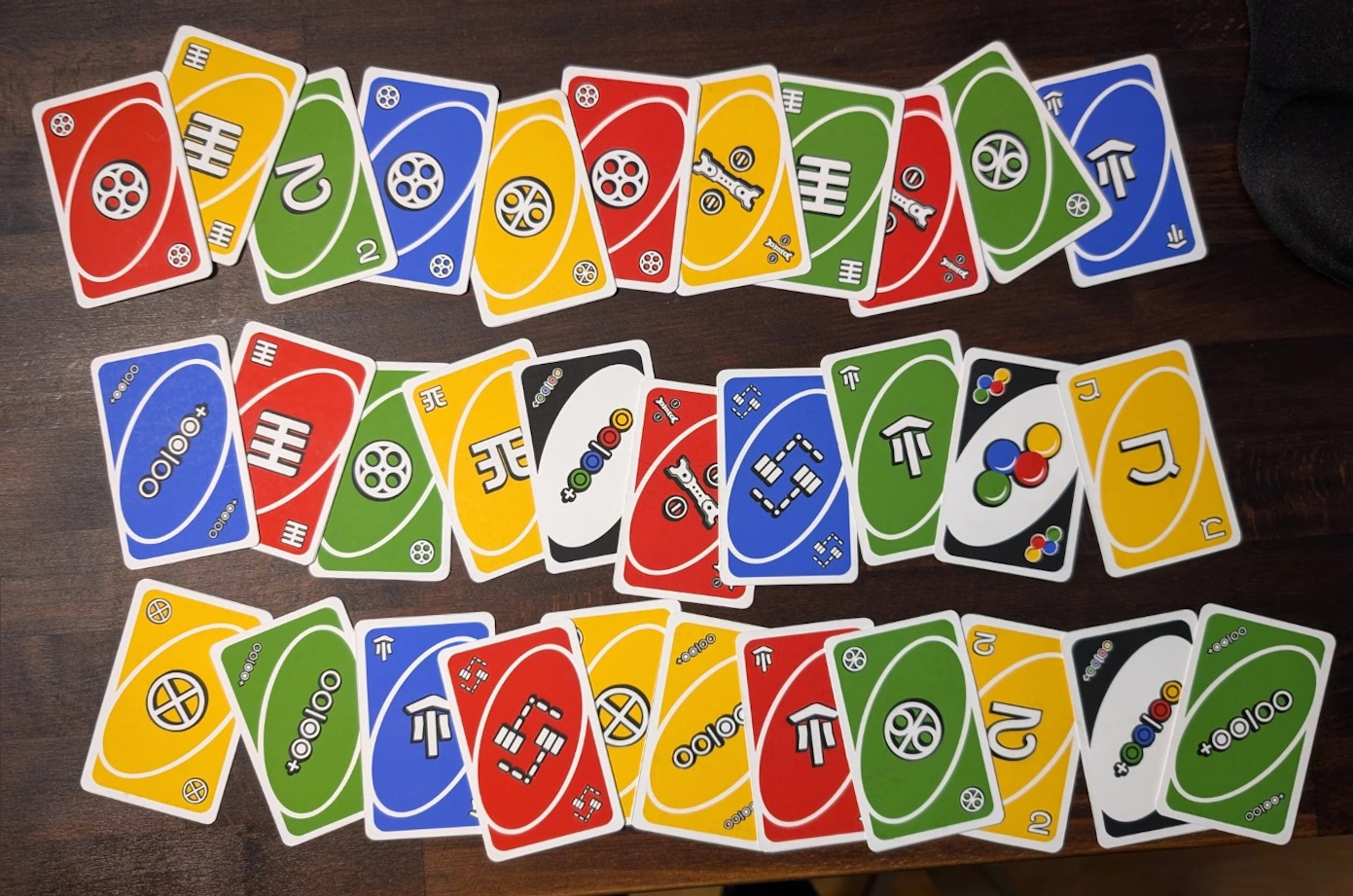
A while ago, I saw a concept on Reddit by JeremiahBlueCat for a Rain World themed UNO game. I found this idea really cool, as I love the aesthetic of Rain World, and combining the numeric Karma Symbols with the standard UNO numbers just makes so much sense to me. So I kept this in the back of my mind for a few weeks, and pretty soon decided I wanted to make my own version of it. I had actually made a custom card game with my friends once before (UNBALANCED), and while the game was really fun, the cards themselves were of lesser quality. This time, I wanted to really try and make a high-quality, professional-feeling card game myself, from the design to the physical cards and the box itself. I decided to call it "WAWA", which is the sound the Slugcats make according to the community, and because it's something short that you can easily say out loud.
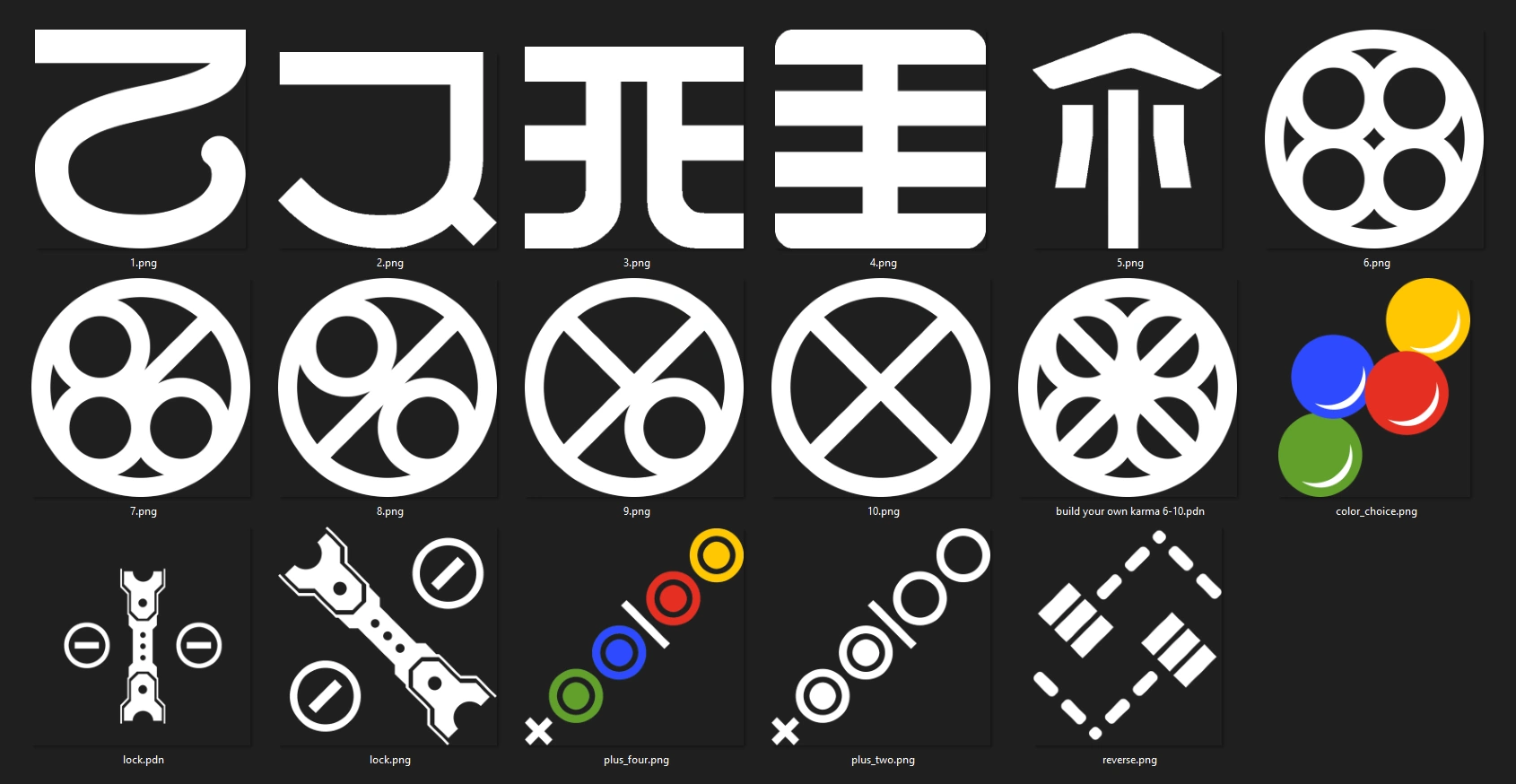
The first step was designing the Karma symbols to represent the numbers zero through ten on the standard cards. For the other special action cards, I made several concepts and picked my favorites. The "Draw" cards have the food pip bar with two or four pips filled in depending on the card's power. The "Reverse" card is represented by two pipes leading into each other. The "Skip" card is a blocked Karma Gate from Downpour. Finally, the "Wild" color card shows four colored pearls. I drew all of these symbols myself in high resolution using paint.net, using in-game screenshots as references to get the shapes right.
Since an UNO deck has 108 cards and mine has an additional four (karma ten in every color) for a total of 112, I quickly realized that manually overlaying every symbol onto every colored background would not be feasible as a manual job. Also, I wanted the symbols to have the standard 3D drop-shadow effect that UNO card numbers have. So, I wrote a custom Python script that takes a folder of base colored card templates and a folder of my transparent symbols. The script automatically scales the symbols, calculates the shadows, and composites them into the center and the corners of the cards. A second script takes the generated cards and arranges them onto A4 sheets for printing.
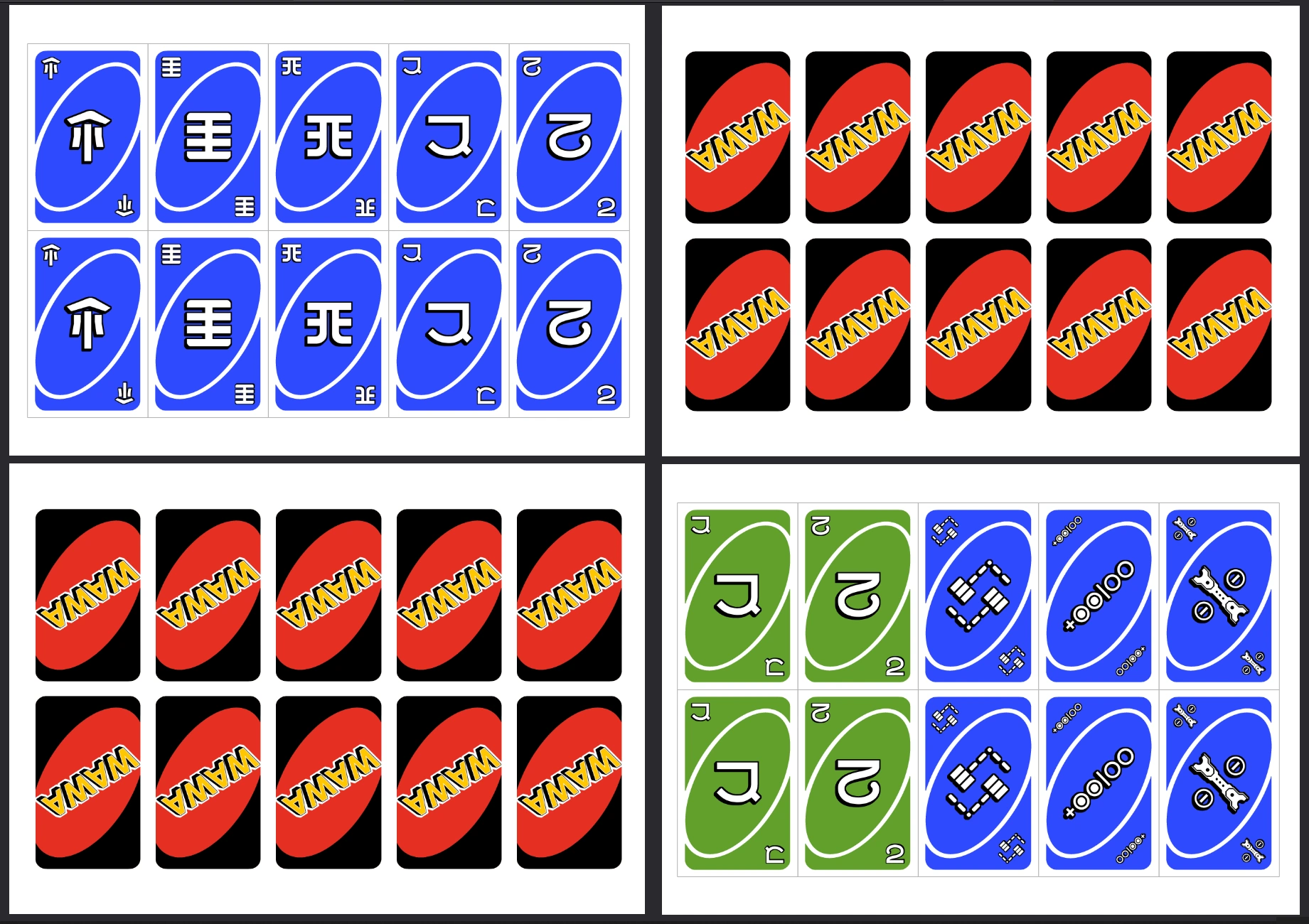
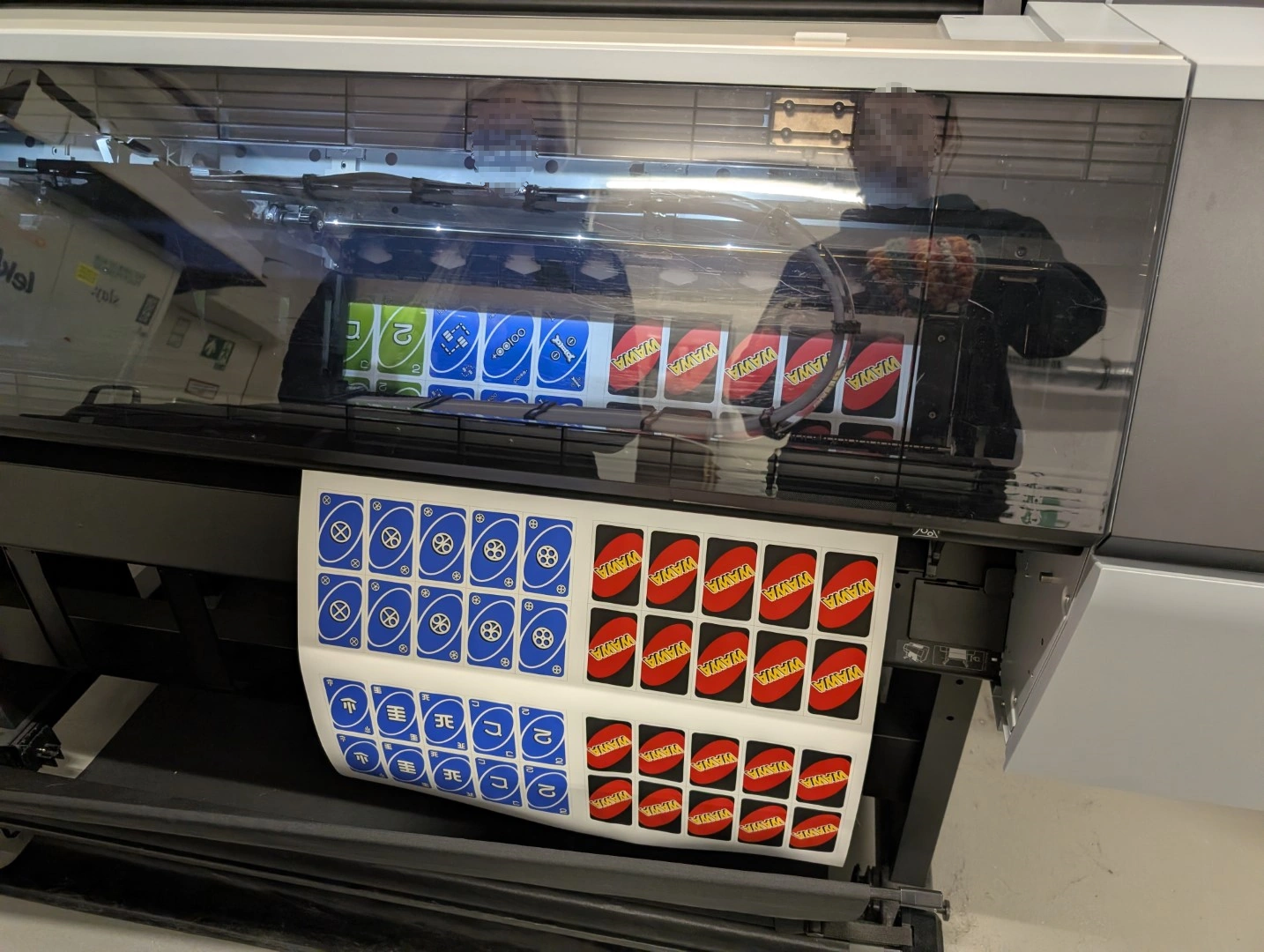
At first, I looked into using a professional printing service, but they all required a minimum order of 20 or more decks and that was more pricey than I wanted it to be. My brother studies at a university where he has access to some large-format printers, so I asked him for help, and a few weeks later I drove down there to print them. We used a simple, thicker paper stock they had available. Because the printer wouldn't do double-sided prints (or at least, we did not know how to), we printed the front and back sheets completely separately.
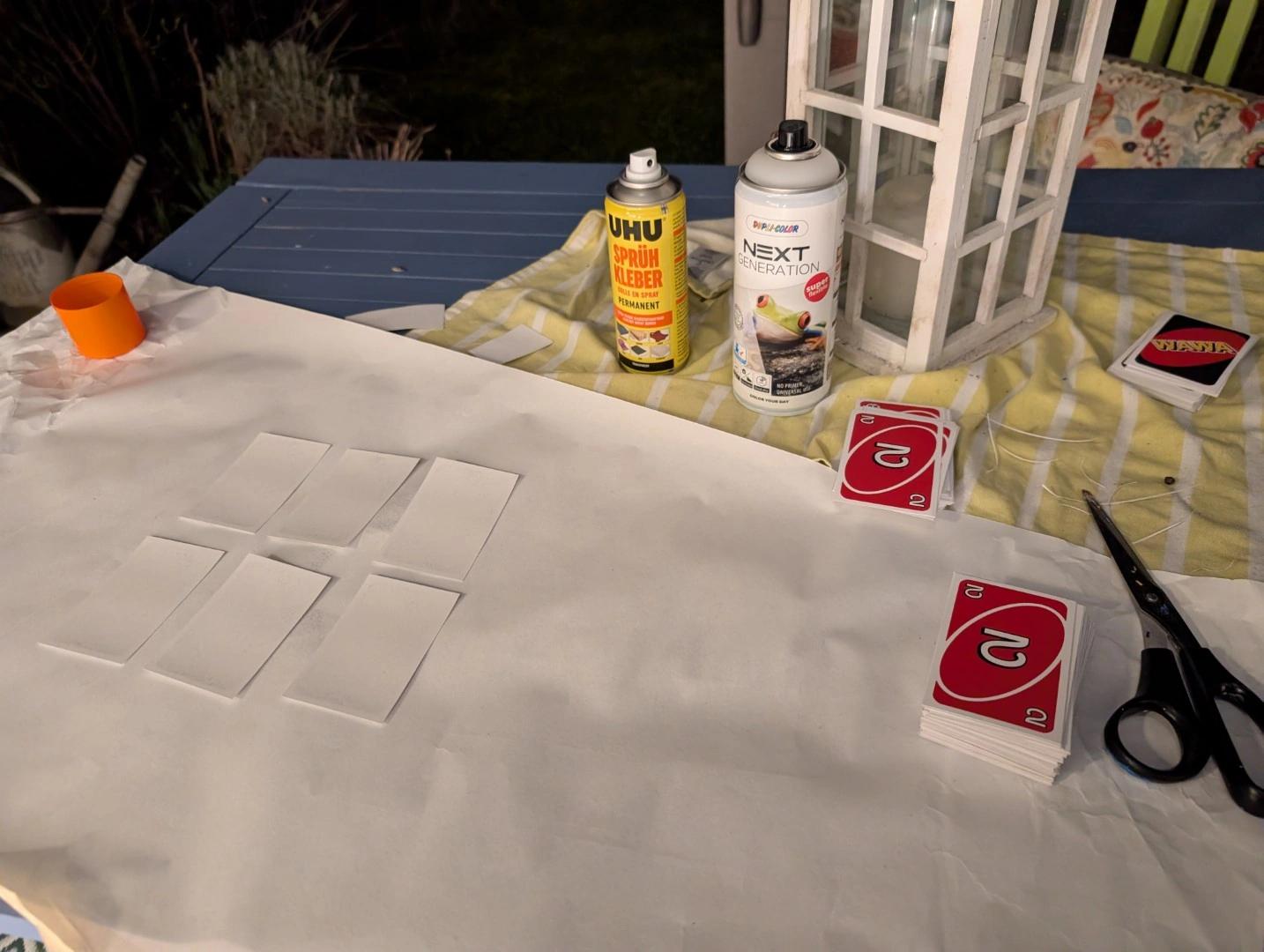
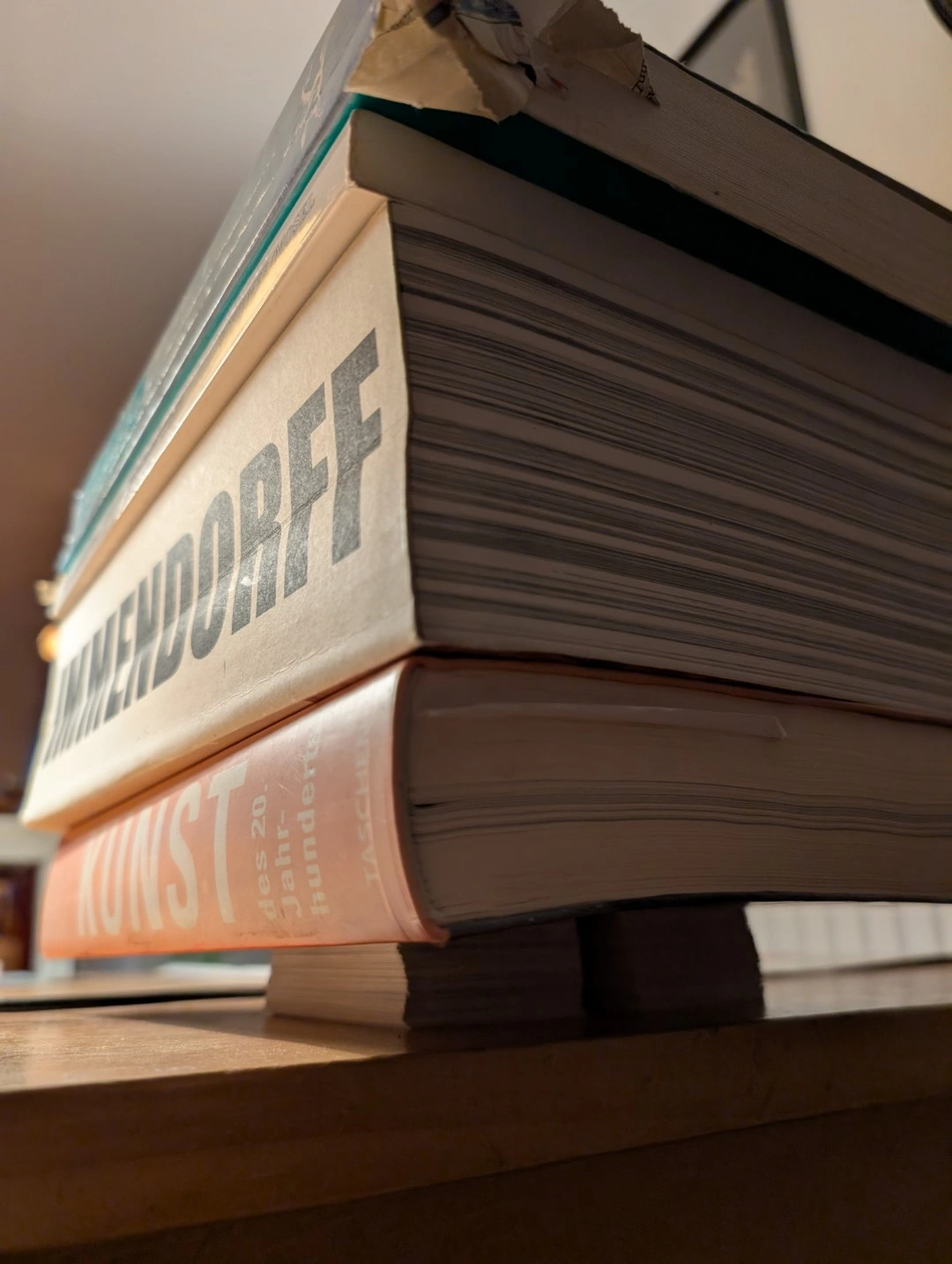
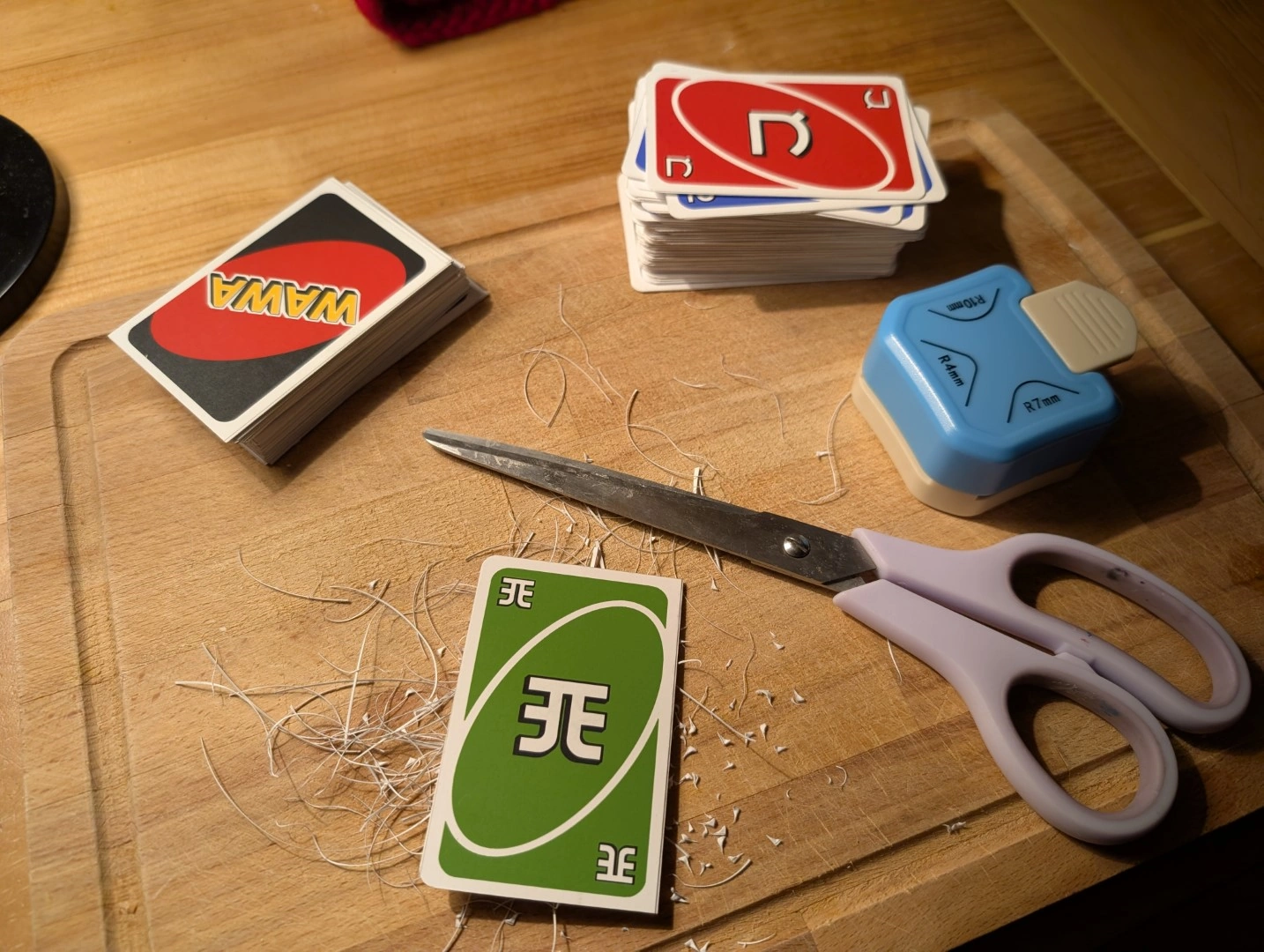
With the sheets printed, I could get started on the physical aspect of the project. I had to cut out all the card fronts and their backsides using a cutting machine, which amounted to 224 individual pieces of paper. I then took everything outside and used a spray glue to stick the printed front and back sheets together. The paper didn't feel quite right yet, so to make them feel more like real playing cards, I applied a layer of clear matte lacquer spray. I soon realized that I should have applied the lacquer spray before stacking the cards together. Because I stacked them too early, the black ink from the backsides rubbed off slightly onto the fronts of the cards below them. It caused some minor staining, but it was a good learning experience, and when you are actually playing the game, you don't even notice it. Because the layers also started to separate slightly over the evening, I stacked all the cards into a neat pile and put several kilos of heavy books on top of them overnight to press them together permanently. I also bought a special corner-rounder punch to clip the sharp edges off every single card.
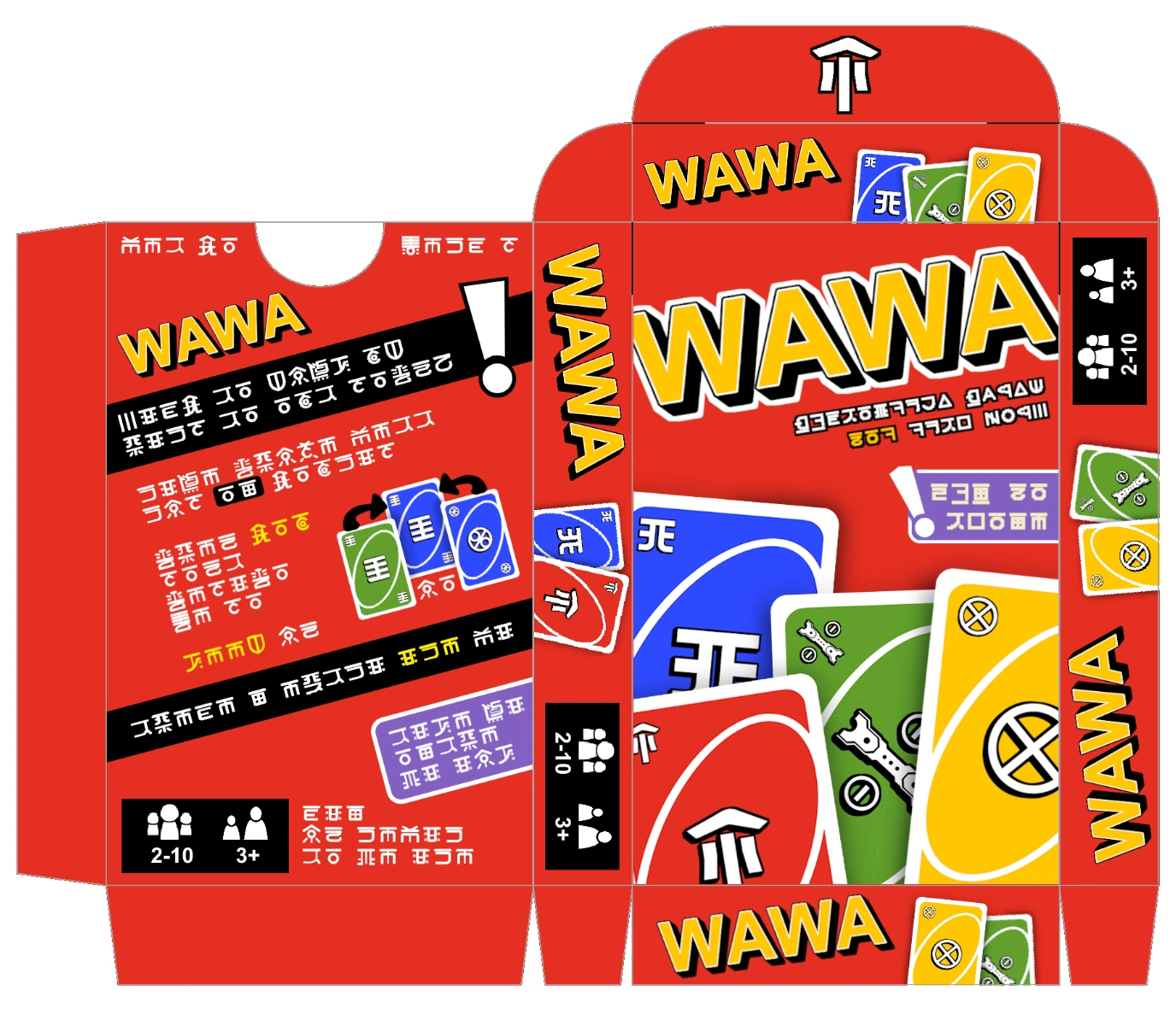
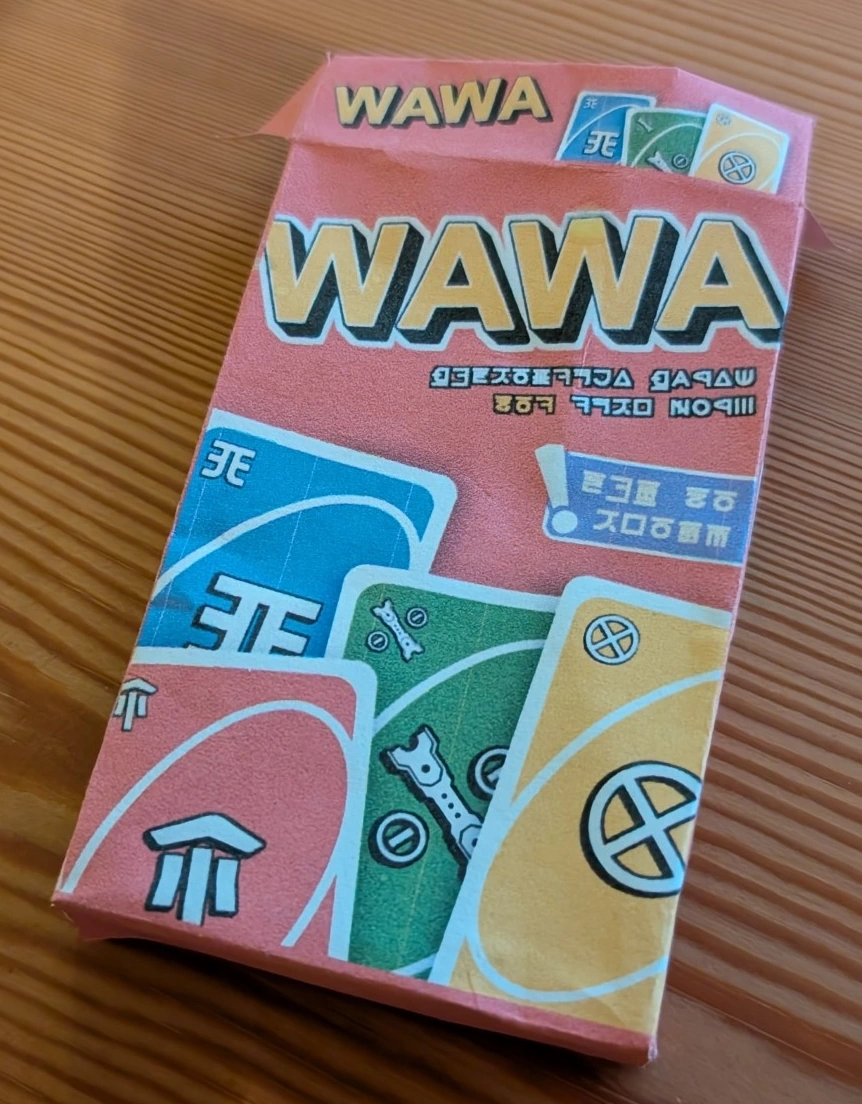
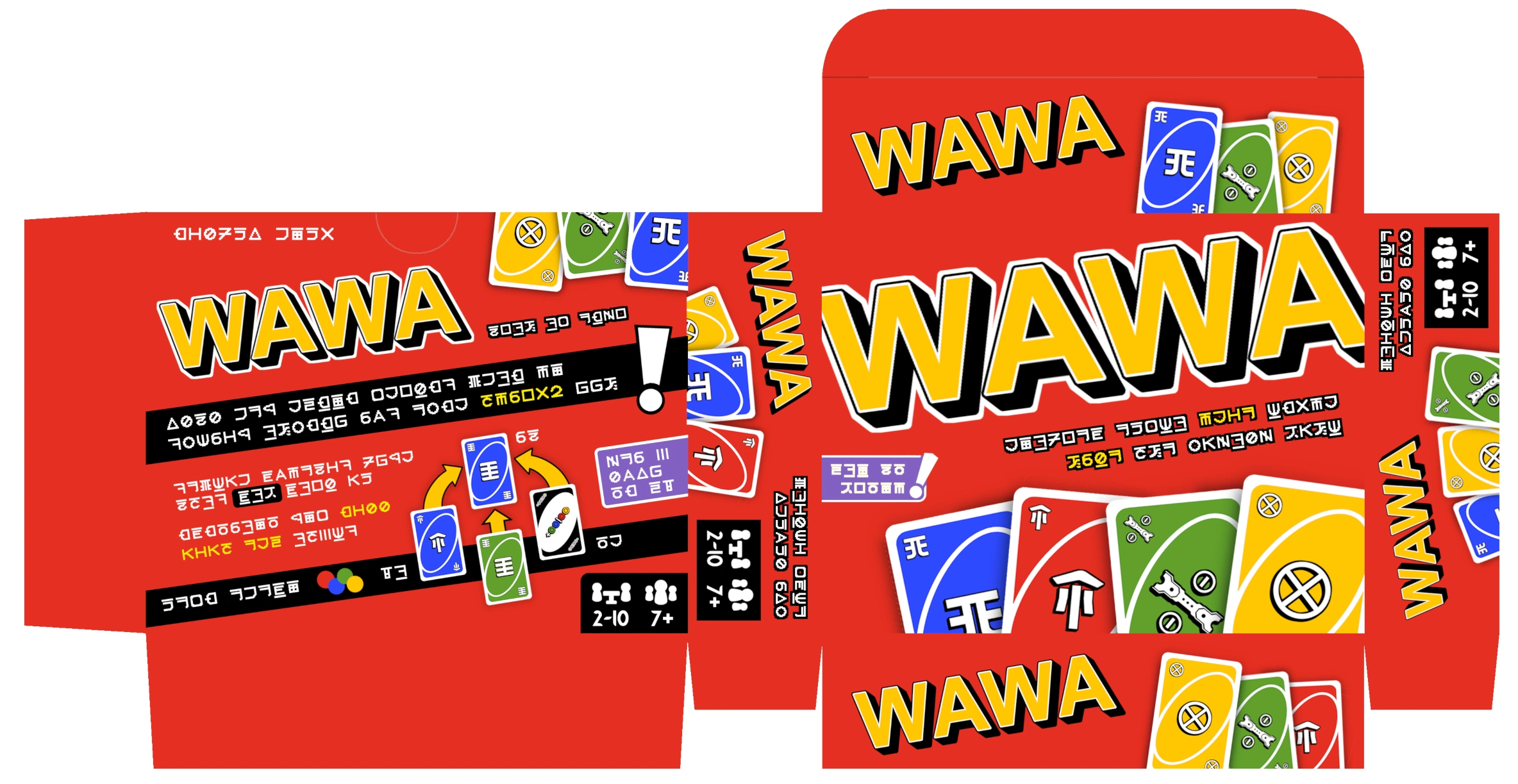
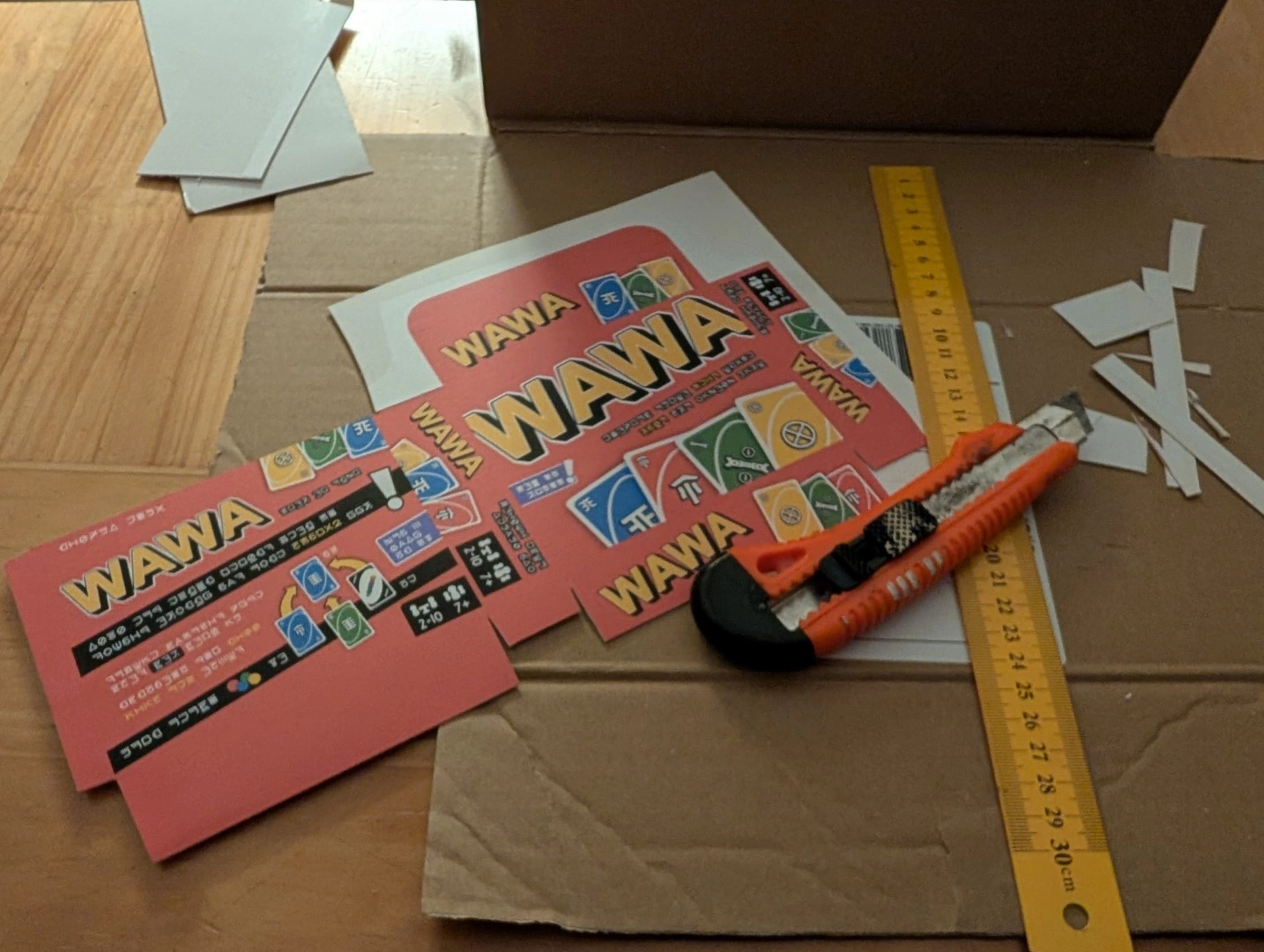
The final step was creating a custom box to hold the deck. I used an online paper box generator to get the template, and applied the classic UNO design customized with my "WAWA" logo and a Rain World alphabet font I found. I actually had to design the box twice, because my first attempt was created before I had printed and glued the cards together. I vastly underestimated how thick a stack of 112 thick, glued, and lacquered cards would be, so the first box was about five times too small! For the final version, I printed the design on standard paper and used the spray glue to attach it to some thicker crafting cardboard my mother had. I cut it out with a box cutter, and folded it together into the box shape. It turned out pretty stable and the deck fits perfectly inside.
I really pleased with how this project turned out, in my opinion it does look like a real product, even if it might not quite be retail-ready. The game plays exactly like standard UNO, but the Rain World theme makes pretty fun. It was a bunch of work, but having this unique piece sitting on my shelf was worth the effort.
Because this project uses assets and concepts from the original games (UNO, Rain World), I won't be publishing the raw print files publicly. I want to avoid any potential copyright issues, and I also want to prevent people from taking my designs and using them to sell card packs online. However, if you are interested in creating your own personal deck, feel free to reach out to me and I can share the files with you directly!
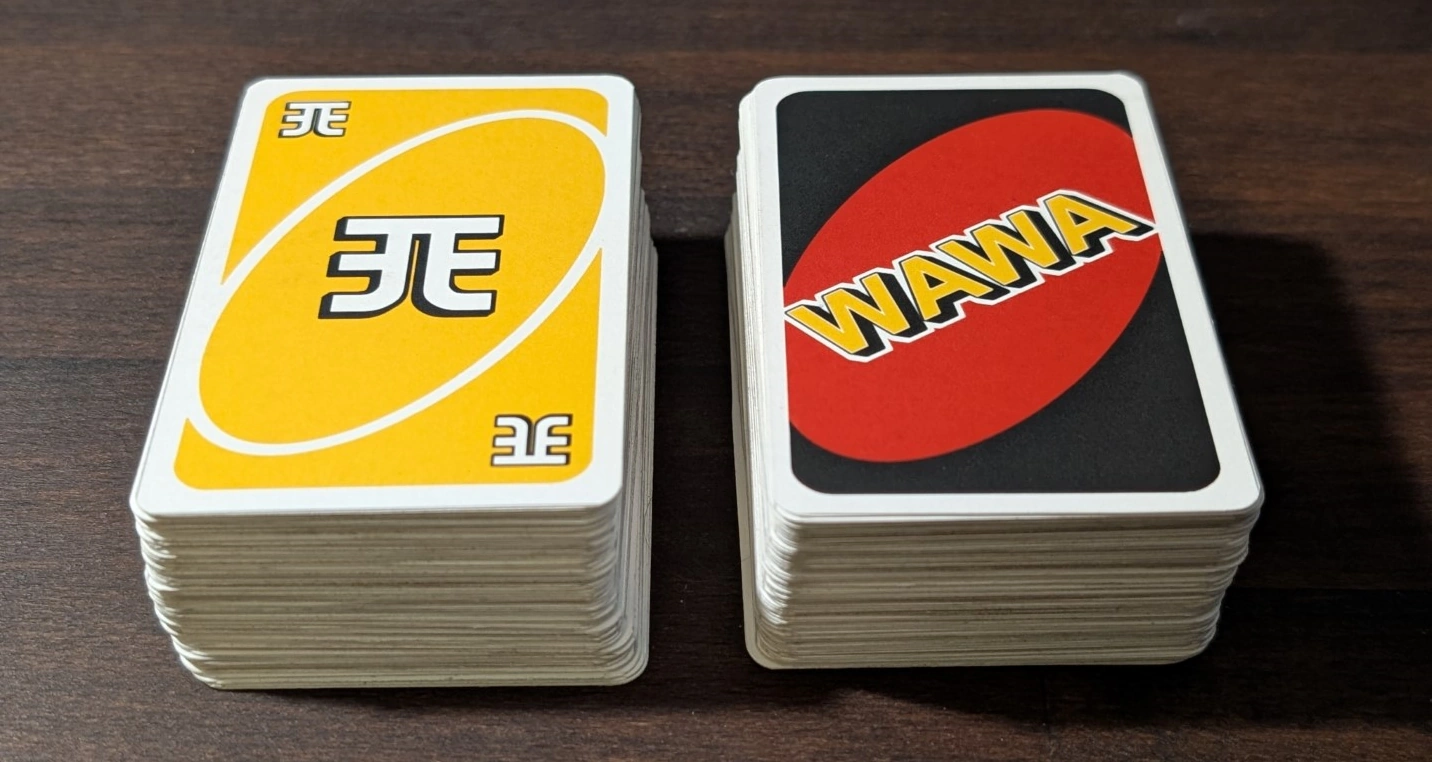
Here's the old design for the card box, where I was way too optimistic about the card heights!